Three Boundaries of SHAP: Attribution, Mechanism, and Causal Identification
Three Nature-family papers show that Shapley values can play very different epistemic roles depending on the surrounding evidence.
- Reference
- notes:n18
- Published
- 2026.04.10
- Series
- note
- Source
- Source ↗
In an earlier note, The Interpretive Boundary of SHAP: From Model Attribution to Causal Identification, I proposed a three-level epistemic classification for SHAP: model-based attribution, process-informed interpretation, and causality-informed identification.
This essay places that framework against three published studies and asks a narrower question: what epistemic role do SHAP or Shapley values actually play in each paper's evidence chain?
01 · Attribution: SHAP kept within model-based attribution
Chen et al., Nature, 2026: “Gene regulatory landscape dissected by single-cell four-omics sequencing.”
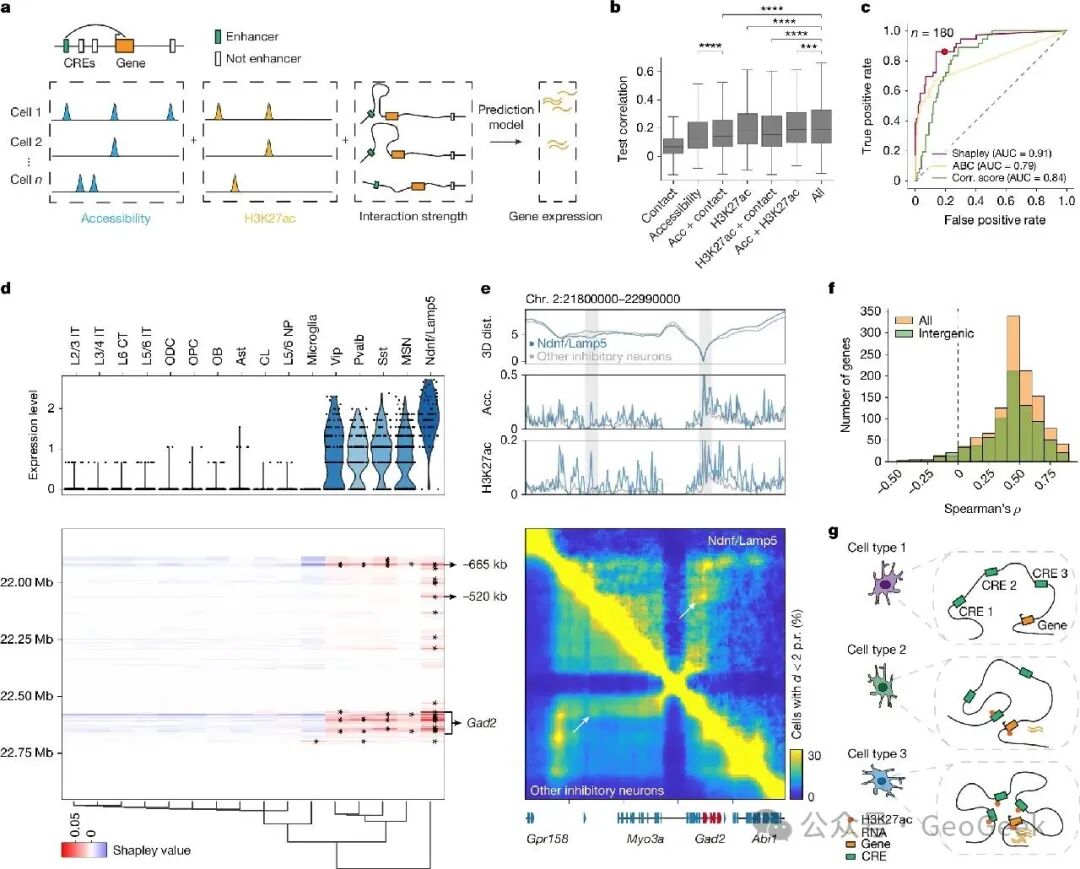
Figure 1 · SHAP used for model attribution and ranking of regulatory elements (Chen et al., Nature, 2026).
The paper builds gene-expression prediction models from single-cell four-omics data and uses them to identify candidate enhancer–promoter linkages. Shapley values quantify the contribution of genomic bins to expression prediction; predicted linkages are then compared with experimentally validated enhancer–promoter pairs.
The role of SHAP is clear. It decomposes the output of the model, not the biological process itself. More precisely, it asks which input regions the trained predictive model relies on, and which genomic bins contribute most strongly to a particular enhancer–promoter prediction.
What is revealed is the representation structure of the model, not the ontology of the regulatory mechanism. The paper's biological interpretation does not rest on SHAP alone; it is supported by multi-omics integration, 3D chromatin structure, and external validation.
This is a clean example of model-based attribution. SHAP can quantify contributions and prioritize features, but it cannot by itself establish that a particular genomic element is the regulatory mechanism. The paper does not ask it to do so.
02 · Mechanism: SHAP supporting process-informed interpretation
Delavaux et al., Nature, 2023: “Native diversity buffers against severity of non-native tree invasions.”
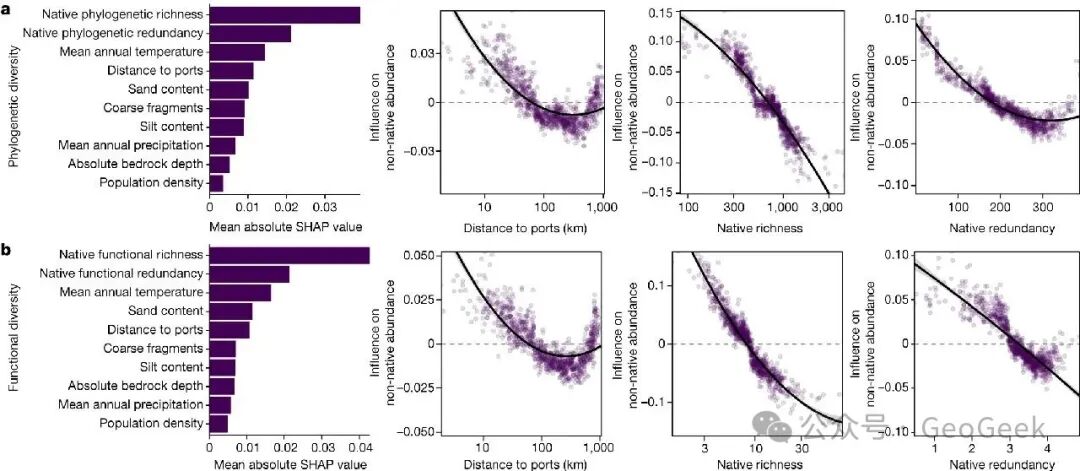
Figure 2 · SHAP used for variable contribution and process interpretation in Delavaux et al. (Nature, 2023).
The paper examines relations among ecological variables, human activity, and the severity of non-native tree invasion. Random Forest models are used to assess variable importance, while GLMs test the significance and direction of associations. The authors explicitly describe the Random Forest component as a tool for variable importance and visualization. SHAP values therefore describe contribution and response patterns within a predictive modelling framework.
Methodologically, this remains post-hoc attribution after predictive modelling, not causal inference. SHAP first says how variables such as native diversity or distance to ports contribute to predictions of invasion presence or severity.
The paper then moves beyond model behavior by reading those attribution patterns through ecological theory, including biotic resistance and niche filling. That step is process-informed interpretation. SHAP is used to ask whether the model's attribution pattern is consistent with established ecological mechanisms and whether it supplies additional support for a theory-consistent reading.
That can be scientifically useful without becoming mechanism identification. The evidence says that the predictive model behaves in a way that fits a mechanistic account; it does not establish the mechanism solely through SHAP.
03 · Causality: SHAP embedded inside a causal framework
Liu et al., Nature Plants, 2025: “When and where soil dryness matters to ecosystem photosynthesis.”
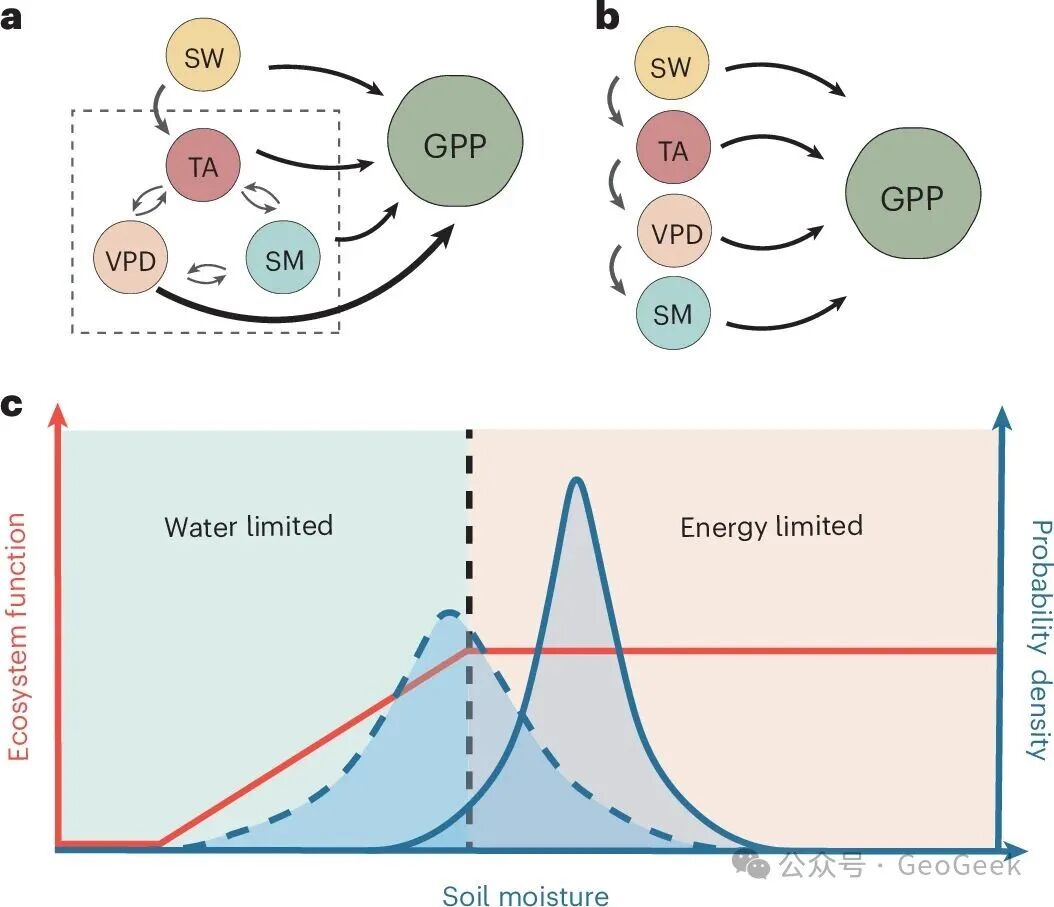
Figure 3 · The causal structure precedes attribution: a regime-dependent causal framework (Liu et al., Nature Plants, 2025).
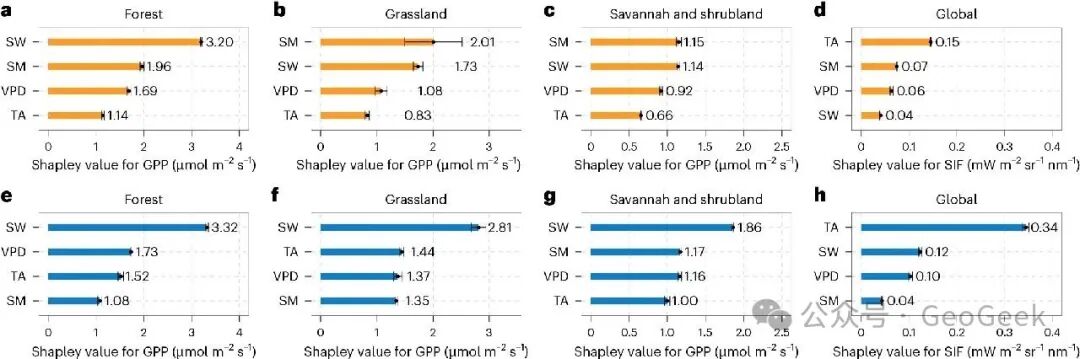
Figure 4 · SHAP contribution decomposition embedded within the causal framework (Liu et al., Nature Plants, 2025).
This study is different from the first two because it does not begin with ordinary SHAP and attach causal language in the discussion. The causal question is built into the research design. The authors use a causality-guided explainable-AI framework, distinguish regimes, construct causal-chain graphs, and invoke intervention semantics to analyze the effects of soil moisture, VPD, and related variables on GPP.
The paper explicitly contrasts conventional SHAP with causal Shapley. Standard SHAP depends on assumptions about predictor dependence; causal Shapley uses causal-chain graphs and expert domain knowledge to support a causal interpretation.
This does reach the level of causality-informed identification, but the causality does not come from SHAP. The burden of identification is carried by the surrounding commitments: whether the regime distinction is defensible, whether the causal-chain graphs are credible, whether the intervention semantics are well defined, and whether confounding has been addressed structurally.
The paper is unusually explicit about the limits of those commitments. Under water-limited conditions, for example, its causal treatment cannot fully represent the direct effect of air temperature on VPD in the chain graph. The authors argue that this limitation is more likely to overestimate VPD importance than to overturn the primary conclusion.
That admission is methodologically important. The paper does not smuggle causality into SHAP. It states the causal premises and accepts the interpretive risk if those premises are wrong.
Closing note
The three papers show that the role of SHAP changes substantially across evidence chains.
At the model-based attribution level, SHAP decomposes model output. At the process-informed interpretation level, SHAP can support mechanism-consistent explanation without constituting mechanism identification. At the causality-informed identification level, SHAP participates as a representation or decomposition tool inside an explicit causal framework; it is not the source of causality.

References
- Chen, Y. et al. Gene regulatory landscape dissected by single-cell four-omics sequencing. Nature (2026).
- Delavaux, C. S. et al. Native diversity buffers against severity of non-native tree invasions. Nature 621, 773–781 (2023).
- Liu, J. et al. When and where soil dryness matters to ecosystem photosynthesis. Nature Plants 11, 1390–1400 (2025).